
CoFlow
CoFlow proposes shared water systems for homes facing water shortages in California. Neighbouring households collect, treat and reuse water together.
By FLOW Team 25/26
Student winner, Shaping the Future of Water Use at Home, USGBC California, 2026
The Three Principles
REDUCE REUSE RECHARGE
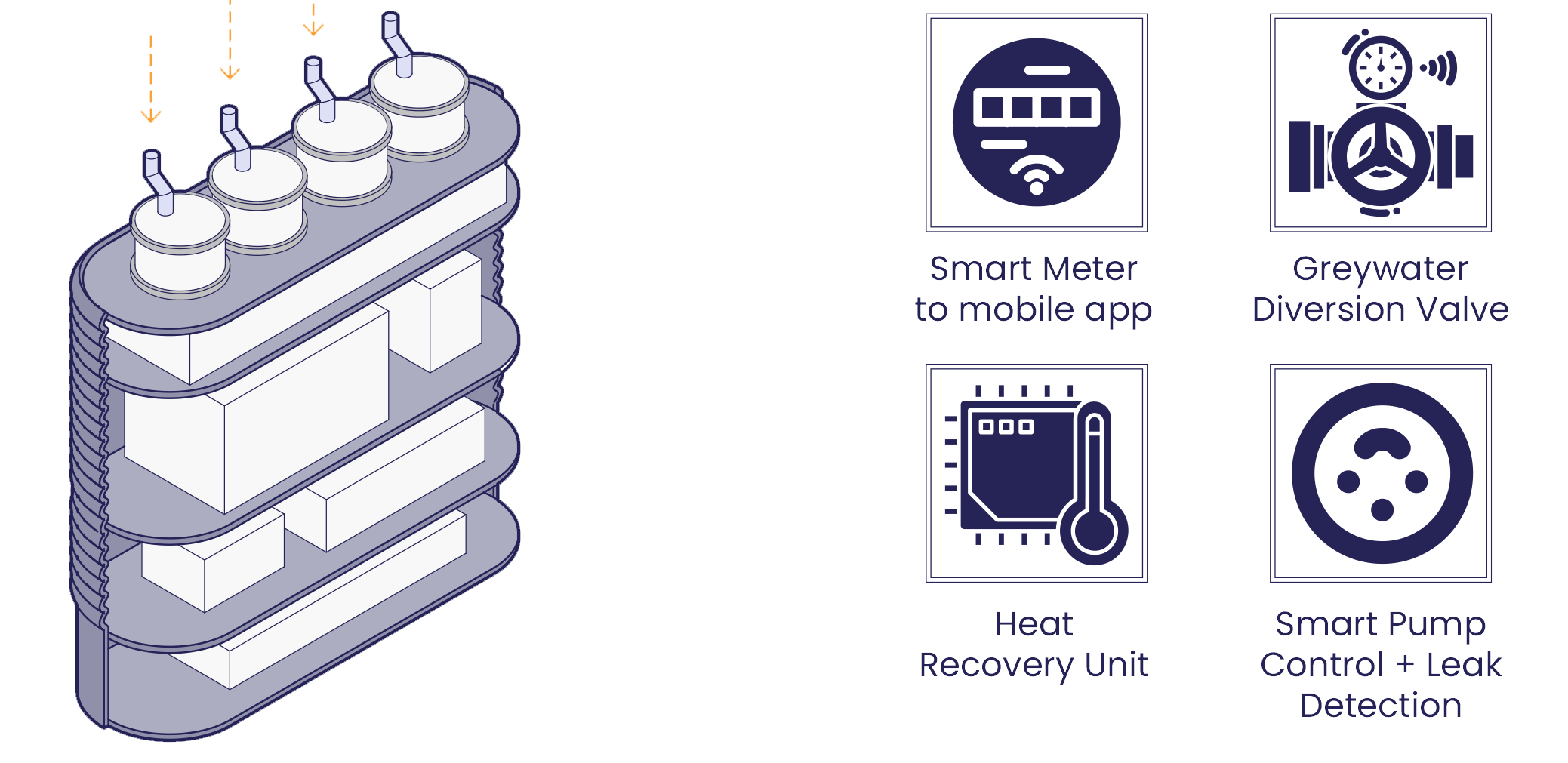
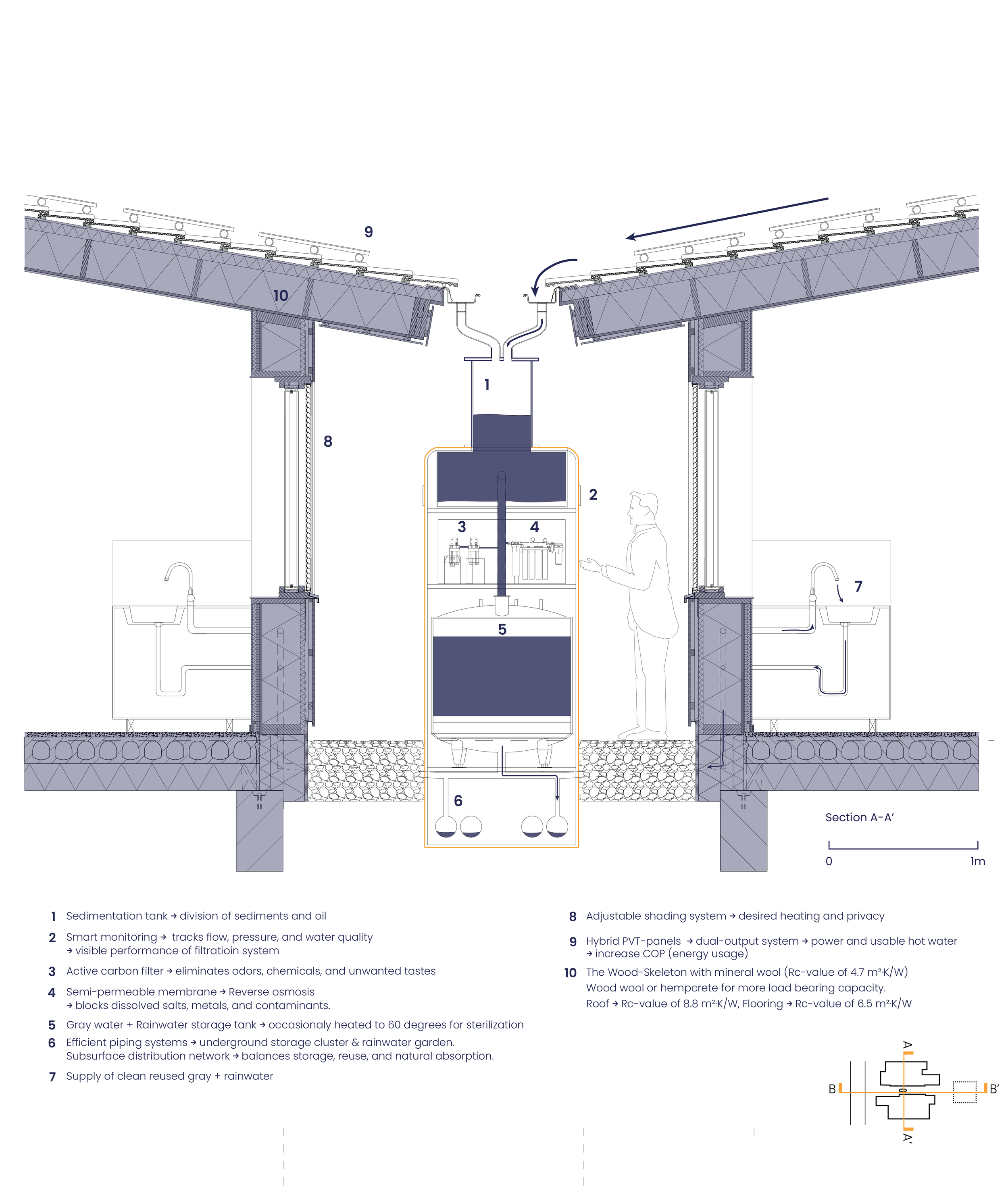
Homes are organised around a shared water spine. Rainwater storage, greywater treatment, filtration and hot-water systems sit together in a wet core between neighbouring homes. Parts of the system stay visible so residents can follow the flow, see storage levels and understand where water is reused.
Reduce, reuse and recharge guide the design. It aims to use less drinking water, keep water in circulation and return it to the ground. The modular system is intended for new buildings and retrofits.
Design Systems and Performance
Landscape and architectural features
-
![Shared water core with smart metering, greywater diversion, heat recovery and leak detection.]()
Shared water core
-
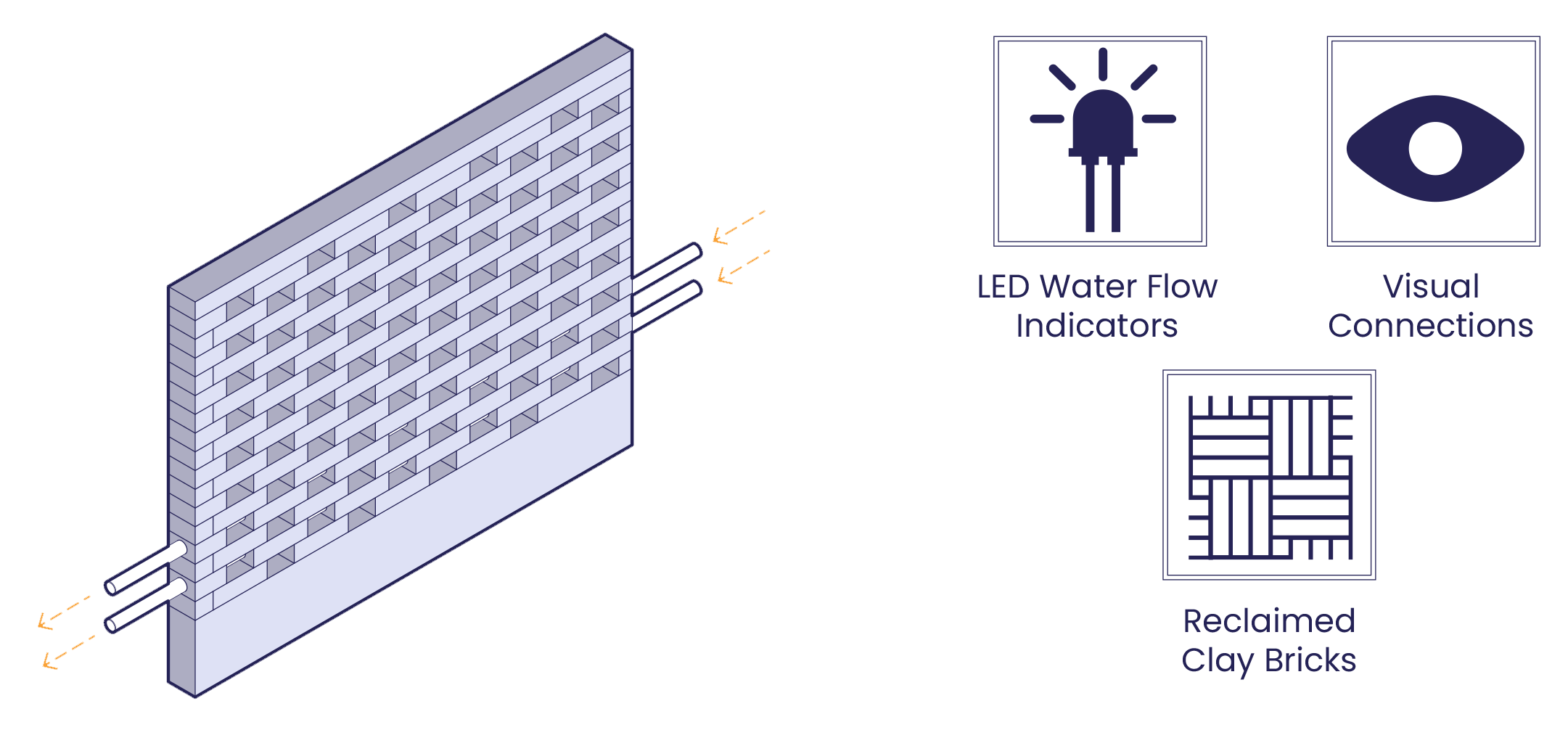
![Porous water wall made from reclaimed clay bricks, with visible pipes and LED flow indicators.]()
Porous water wall
-
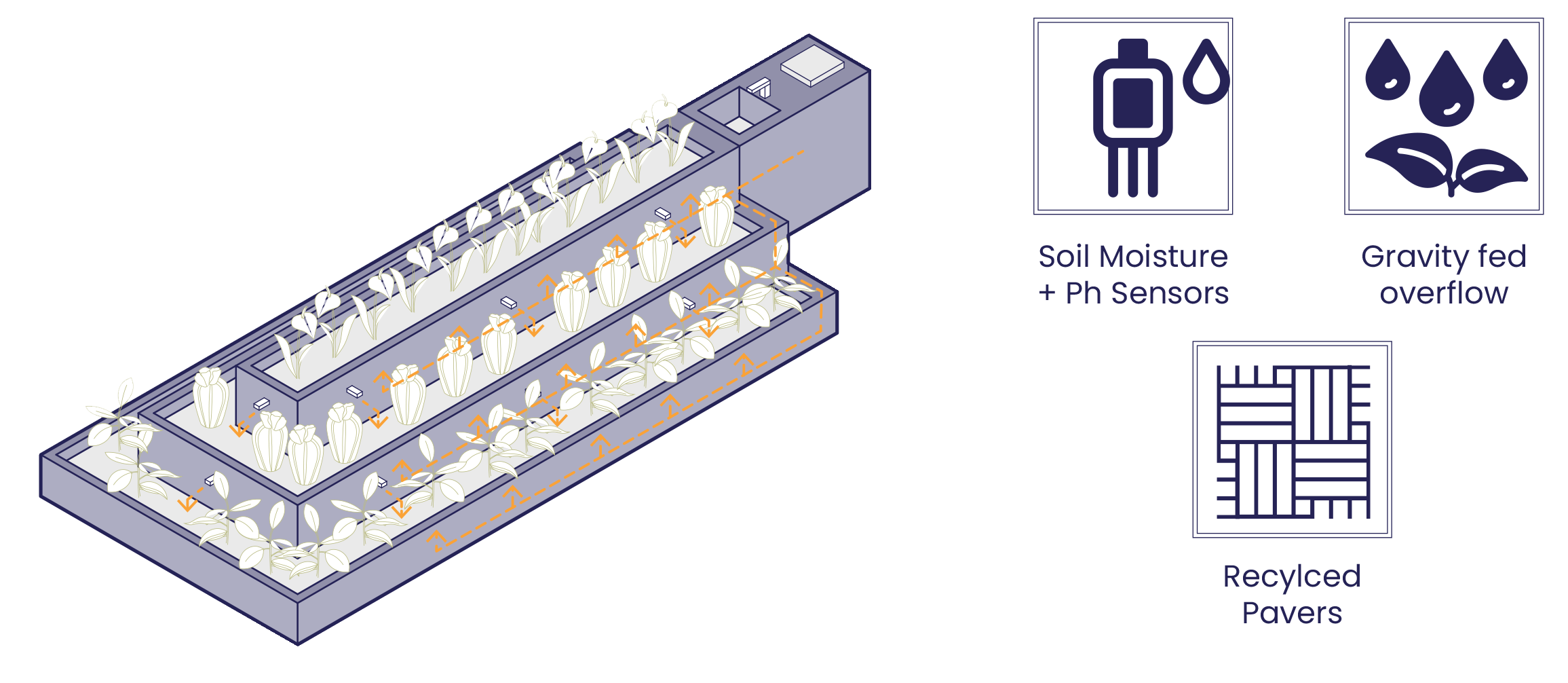
![Edible planting bed with drip irrigation, soil sensors and overflow drainage.]()
Drip irrigation edible cascade
-
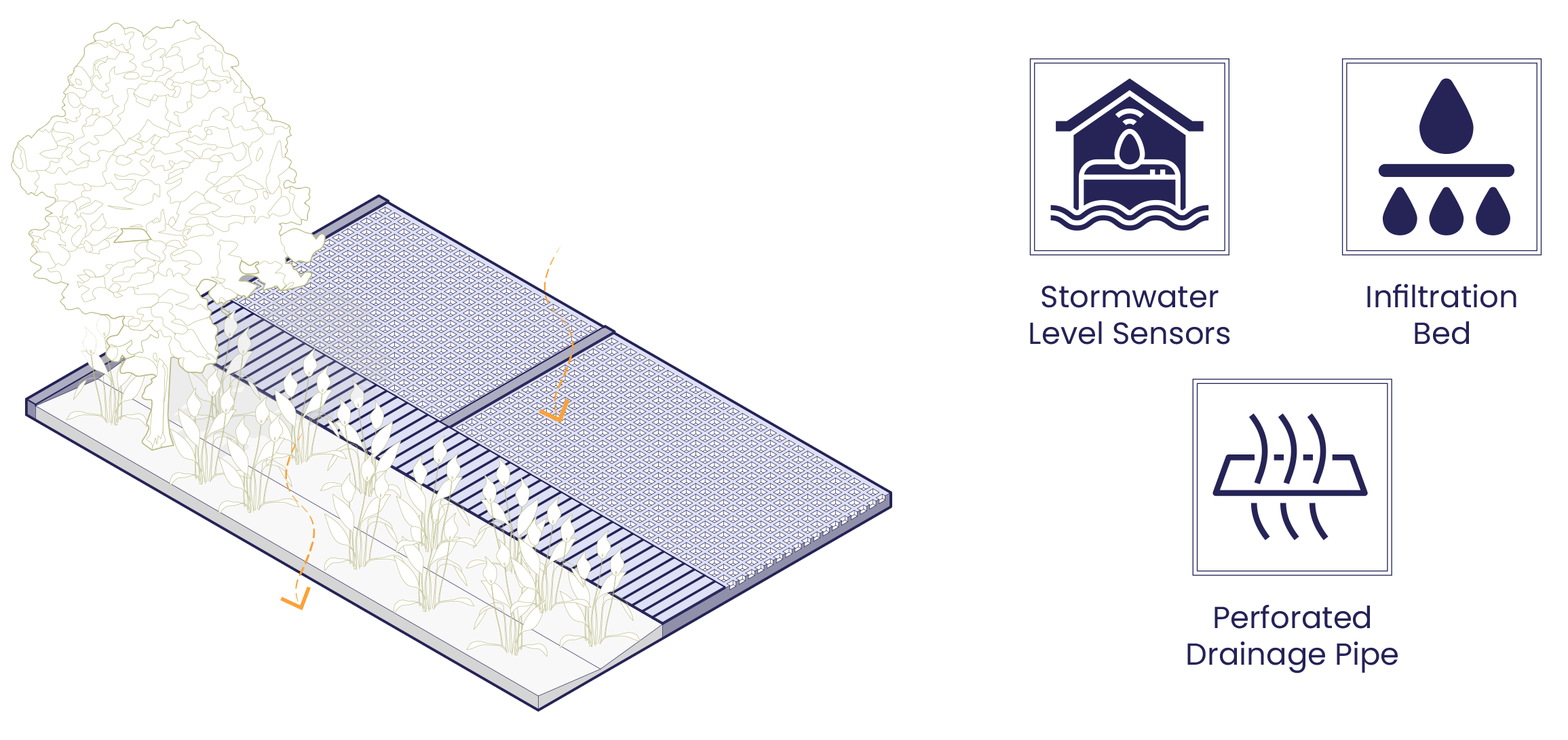
![Permeable landscape edge with an infiltration bed, water-level sensors and a perforated drainage pipe.]()
Permeable landscape edge
-
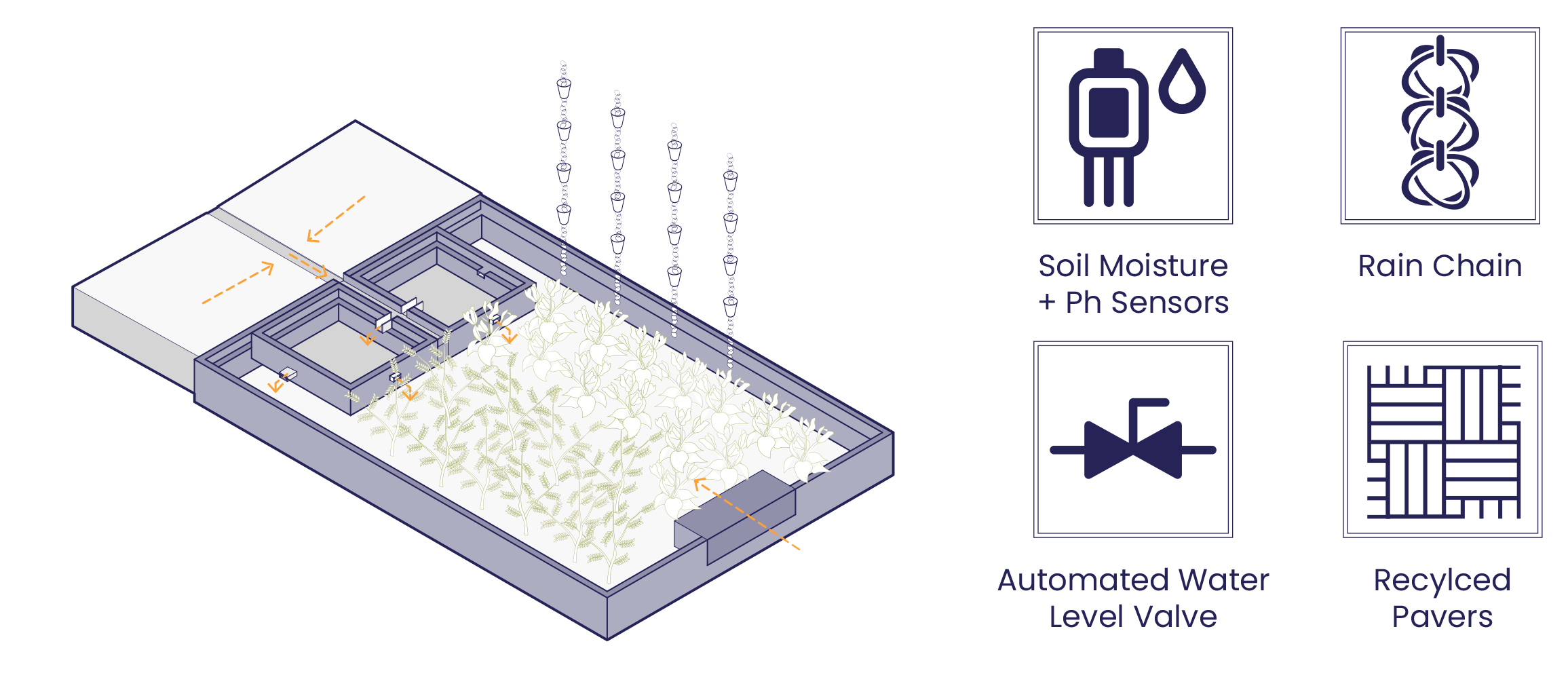
![Rain garden court with a rain chain, soil sensors and an automated water-level valve.]()
Microcatchment backcourt
-
![Roof canopy with hybrid PVT panels, a polycarbonate water screen and monitoring.]()
Hybrid PVT roof canopy

Scalability
-
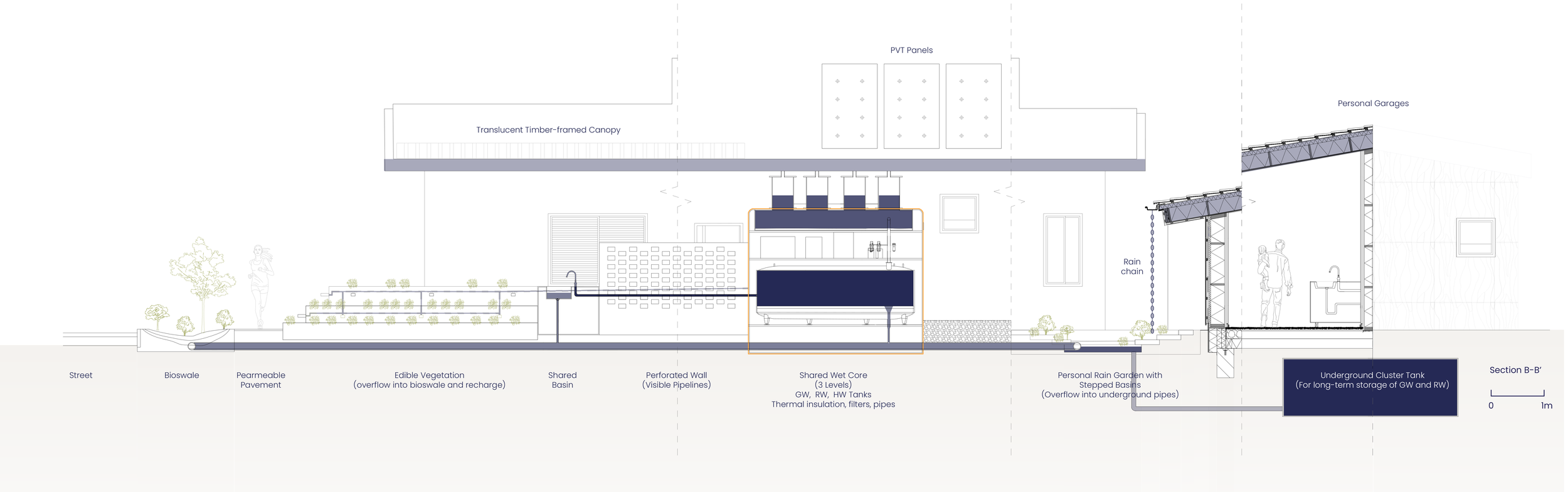
Two neighbouring homes share a wet spine containing their main water systems. Bringing the equipment together shortens pipes and reduces heat loss from hot water. The proposal combines rainwater harvesting, greywater reuse, filtration and heat-pump heating, alongside water-saving fixtures. Captured rainwater or treated greywater irrigates shared edible gardens in front of the homes.
-
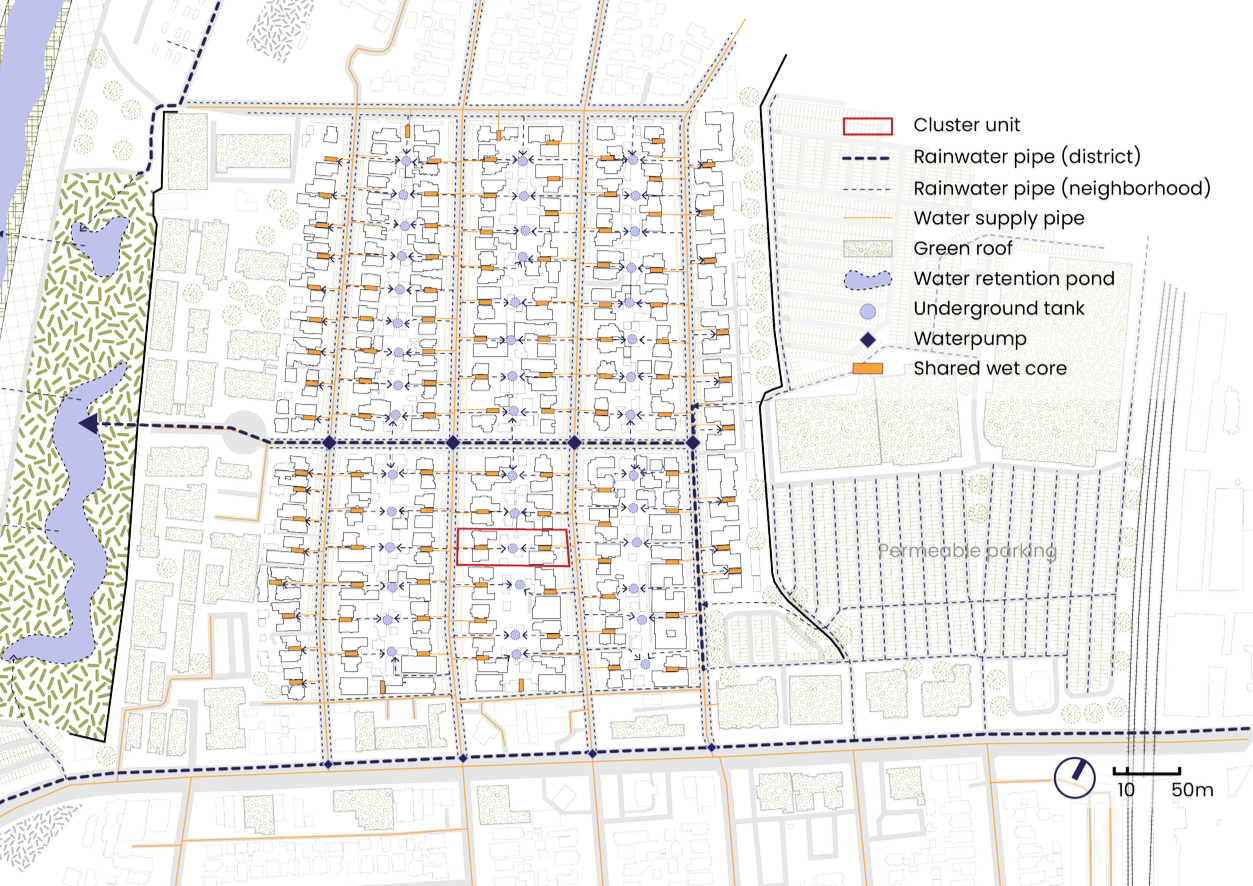
Four households share an underground tank that collects roof and garden runoff, surface overflow and excess greywater. After treatment, stored water can supply toilet flushing, laundry, cleaning and irrigation during dry periods. Monitoring lets residents see how much water is stored and used.
-
Runoff from nearby commercial areas passes through green roofs, bioswales and park retention basins. These slow the flow and allow water to soak into the ground before overflow reaches the river.
Beyond one neighbourhood
Developed for California, CoFlow explores how neighbours can share the work of saving and reusing water. The same approach could inform housing in other places facing water shortages.